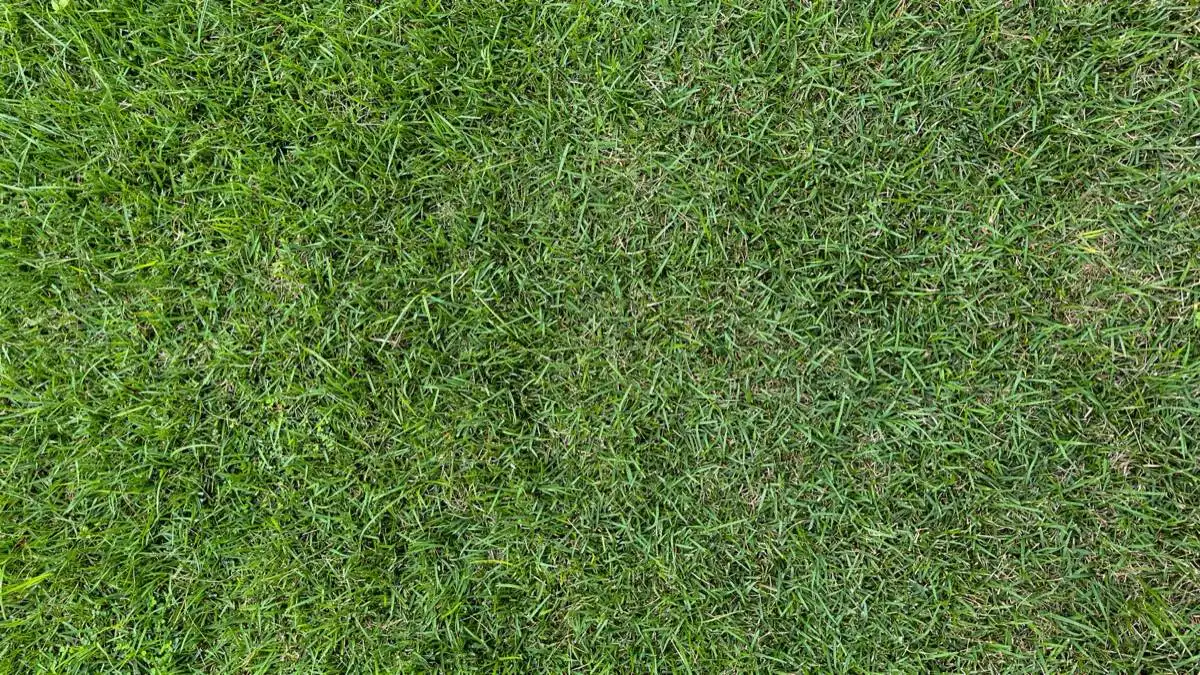
The best time to lay sod is early fall or spring, when temperatures are mild and the soil is warm enough to root but not hot enough to fry. That's the short answer. The longer answer, and the one that actually matters for your yard, is that it depends on your grass: warm-season types go down late spring to early summer, and cool-season types go down in early fall.
Here's the thing most timing guides bury: you can lay sod almost any time the ground isn't frozen. Sod is living grass with roots already attached — it doesn't need a calendar's permission to grow. Timing doesn't decide whether sod works. It decides how hard you have to work to keep it alive while it roots.
The one-line answer by grass type
Grass falls into two camps, and the camp decides the season. Warm-season grasses are the ones that belong in Mission and the rest of the the Upper Rio Grande Valley; cool-season grasses run the northern half of the country.
| Grass | Type | Best window to lay | What to avoid |
|---|---|---|---|
| St. Augustine | Warm-season | Late spring–early summer | Peak summer heat, first frost |
| Bermuda | Warm-season | Late spring–early summer (early fall ok) | Cold snaps, dormant winter soil |
| Zoysia | Warm-season | Late spring–early summer | Deep summer heat, hard freeze |
| Palisades / Empire Zoysia | Warm-season | Late spring–early summer | Frozen ground |
| Tall fescue | Cool-season | Early fall (spring 2nd) | Mid-summer heat |
| Kentucky bluegrass | Cool-season | Early fall (spring 2nd) | Summer heat stress |
The pattern is simple once you see it. Warm-season grass roots when the soil is warm — think 65°F and climbing at root depth. Cool-season grass roots when the soil is cool but not cold. Lay each in its window and the grass does the work for you.
Why early fall is the quiet favorite
If we had to pick one season for most of the country, it'd be early fall, and here's why: the air has cooled off but the ground is still holding summer's warmth. That combination — mild days, warm soil — is exactly what roots want. The sod isn't fighting a heatwave, and you're not chained to the sprinkler four times a day.
Fall sod also gets a head start on the next year. It roots through the cool months and wakes up in spring already established, while a spring lawn is still finding its feet. Less stress on the grass, less babysitting for you.
Spring is the close runner-up. Warm-season grass laid in late spring roots fast because the soil is heating up, and you've got the whole growing season ahead of you. Just don't jump the gun — sod laid into cold spring soil sits and sulks until things warm up.
Can you lay sod in summer? Yes, with an asterisk
Short version: yes, and in a place like Mission a lot of sod goes down in summer because warm-season grass loves warm soil. The asterisk is water.
New sod has no roots holding it to your yard for the first two weeks, so it's living entirely on what you give it. In the peak of a the Upper Rio Grande Valley summer, that can mean running the sprinklers three or four times a day for that first week to keep the top inch of soil moist. Miss a day and you'll see the edges curl and gray by evening. (If you want the full breakdown of what happens underground and how long it takes, we wrote a whole piece on how long sod takes to root.)
So summer sod works. It just costs you more water and more attention than fall sod does. That's the whole trade-off — the season doesn't change whether it roots, it changes how much effort rooting demands from you.
The opinion we'll stand behind: timing is a convenience, not a rule. You can lay sod in almost any month if you're willing to water it right, and the "wrong" season just means more hose time. A summer lawn watered on schedule beats a perfectly-timed fall lawn that nobody bothered to water. The calendar doesn't kill sod. Neglect does.
The two times you actually shouldn't lay sod
There are only two windows where the season genuinely fights you, and they're the extremes.
- The peak of summer heat. Not summer in general — the hottest stretch of the year, when soil temperatures spike and new sod loses moisture faster than roots can replace it. You can still win here with obsessive watering, but it's the hardest the job ever gets.
- Hard freeze. Frozen ground won't let roots grow, full stop. Cool-season grass laid too late in fall just sits dormant until spring. In Mission's mild winters this is rarely a real concern, which is one reason the laying window here runs longer than it does up north.
Between those two extremes, the door is open. Everything else is a matter of how much water you're willing to commit.
What matters more than the season
Homeowners obsess over the perfect week to lay sod, then skip the parts that actually decide whether it takes. Timing is maybe the fourth most important factor. Ahead of it:
- Soil prep. A flawless week on compacted ground still gets you a lawn that roots two inches down and stops there. Soil prep and topdressing before install buys more than any date on the calendar, and it's the one variable that doesn't care what month it is.
- Grading. If water pools instead of draining, the season won't save you. Grading and leveling sends water away from the house and keeps the roots from drowning.
- Delivery timing — the part of "timing" that actually bites. Not the season, the 48 hours. Cut sod heats inside its own stack, and Oklahoma State Extension's work on sod storage found the heating worse for pallets harvested in July than in cooler months, the middle cooking while the edges dry. So the hotter the week you picked, the shorter your window from truck to ground. Same day, always; in a heatwave, same morning.
- The watering schedule. We keep coming back to this because it's the one that actually kills lawns. Get the water right and mediocre timing is forgiven. Get it wrong and perfect timing won't matter.
Nail those four and the exact week you lay the sod becomes a rounding error.
The Mission bottom line
For warm-season grass in Mission and the the Upper Rio Grande Valley, aim for late spring through early summer — warm soil, fast rooting, and you're ahead of the worst heat. Early fall is an excellent second window, and honestly, thanks to our mild winters, you can lay sod far later in the year than most of the country. Just plan your water around whatever season you pick: the hotter it is, the more the hose earns its keep.
If you'd rather not gamble on timing or babysit a sprinkler, that's our job. Mission Elite Sod & Turf matches the right grass to your yard, handles the full prep, grading, and fresh-cut install, and sends you home with the exact watering schedule for your grass and the time of year we lay it. Free estimate, straight answers: call (877) 684-2382.
Ready for a free quote in Mission?
Mission Elite Sod & Turf — free estimate, clear scope, no pressure. Use the form on this page or jump to the homepage quote.
Related services in Mission
Mission Elite Sod & Turf money pages — go straight to the service you need.
- Bermuda Sod →
Bermuda sod is the water-smart choice for a full-sun yard in Mission, and with Upper Valley rainfall running near 21 inches a year that argument gets easier every summer. Hybrid Bermuda uses noticeably less water than St.
- Land Grading & Leveling →
Land grading and leveling is the invisible half of every lawn we install, and in Mission it is also where the caliche shows up. We laser-grade to a fall of roughly a quarter inch per foot away from the slab, break or remove the hardpan we find on the higher lots north of the expressway, and cut a route for water to actually leave the property.
- Topsoil & Soil Amendment →
Topsoil and soil amendment is what you are really paying for when you buy a lawn, because the four inches under the grass decide nearly everything that happens afterwards. Upper Valley soil tests come back alkaline as a matter of routine, often pH 7.8 to 8.3 with free lime and a salt load from years of canal irrigation, which is exactly why new St.
- St. Augustine Sod →
St. Augustine is still the Upper Valley request under mesquite shade, but canal chemistry and cold snaps decide honesty.
- Zoysia Sod →
Zoysia sod is the upgrade people ask for once they have owned a St. Augustine lawn and grown tired of feeding it — it grows slowly, so you mow less, and it grows densely, so it crowds out most weeds without a spray program behind it.
Frequently asked questions
When should you not lay sod?
Skip the two extremes: the peak of summer, when heat cooks new roots faster than you can water them, and hard freeze, when frozen ground won't let roots grow at all. Everything between those two is fair game. In Mission the risky window is the hottest few weeks of the year, not the whole summer.
Can you lay sod in the summer in Mission?
Yes, and around here plenty of it goes down in summer. Warm-season grass actually roots fastest in warm soil. The catch is water: in mid-summer heat you may be running the sprinklers three or four times a day for the first week. If you can commit to that, summer sod takes fine. If you can't, wait for a cooler stretch or call (877) 684-2382 and let us handle the schedule.
What is the best month to lay sod?
For warm-season grass in the the Upper Rio Grande Valley, late spring through early summer is the sweet spot — the soil is warm enough to root fast but you're ahead of the worst heat. For cool-season grass, early fall wins. There's no single magic month nationwide; it depends on your grass and your climate.
Is it ever too late in the year to lay sod?
Only once the ground freezes or stays cold enough that roots go dormant. In Mission's mild winters that rarely happens, so you can lay sod far later in the year than folks up north can. The trade-off is slower rooting — cool-season sod laid late needs a few extra weeks to grab before winter.
Does the type of grass change when I should lay sod?
More than anything else does. Warm-season grasses like St. Augustine, Bermuda, and Zoysia want warm soil, so they go down late spring to summer. Cool-season grasses like fescue and bluegrass root in cooler weather, so they go down in early fall. Match the timing to the grass and the rest gets easy.
Local context
How this applies in Mission, TX
Every article here is written from sod installation work done in Mission and the Upper Rio Grande Valley, so the numbers reflect local labour, permit and material costs rather than a national average. Your own job can land either side of them depending on access, the condition of what is already there, and the materials you pick — Raleigh St. Augustine sod, Palmetto St. Augustine, Floratam.
The way to turn any of this into a real answer is to have someone look at your actual situation. The free estimate is free, itemized and written down, with no deposit and no obligation. Call (877) 684-2382 or start on the Mission Elite Sod & Turf homepage.
Areas Mission Elite Sod & Turf covers
Mission first, then the surrounding communities of the Upper Rio Grande Valley. Each has its own page with local detail rather than a copy of this one:
- McAllen, TX — Hidalgo County, population 142,210
- Edinburg, TX — Hidalgo County, population 100,243
- Pharr, TX — Hidalgo County, population 79,715
- San Juan, TX — Hidalgo County, population 35,294
- Alamo, TX — Hidalgo County, population 19,493
- Alton, TX — Hidalgo County, population 18,198
Or jump to the full list of Mission services.
More from the Mission Elite Sod & Turf blog
- Bermuda vs St. Augustine Sod for Mission Lawns
Bermuda vs St. Augustine sod in Mission, TX — the sun-hours test that decides it, traffic and shade tolerance, water use, and the mower you will need.
- How Long Does Sod Take to Root in Mission?
New sod roots in about 2 weeks and fully establishes in 4 to 6 weeks, faster in Mission, TX heat. Here's the watering schedule that makes it take.
- Zoysia Sod Pros and Cons for Mission Lawns
Zoysia sod pros and cons in Mission, TX — the density that crowds out weeds, the slow recovery nobody warns you about, and thatch.
The Mission Elite Sod & Turf Team
sod installation specialists serving Mission, TX
Written by the Mission Elite Sod & Turf team — insured sod installation pros with 15+ years serving Mission, TX and the surrounding area.